


وبلاگ
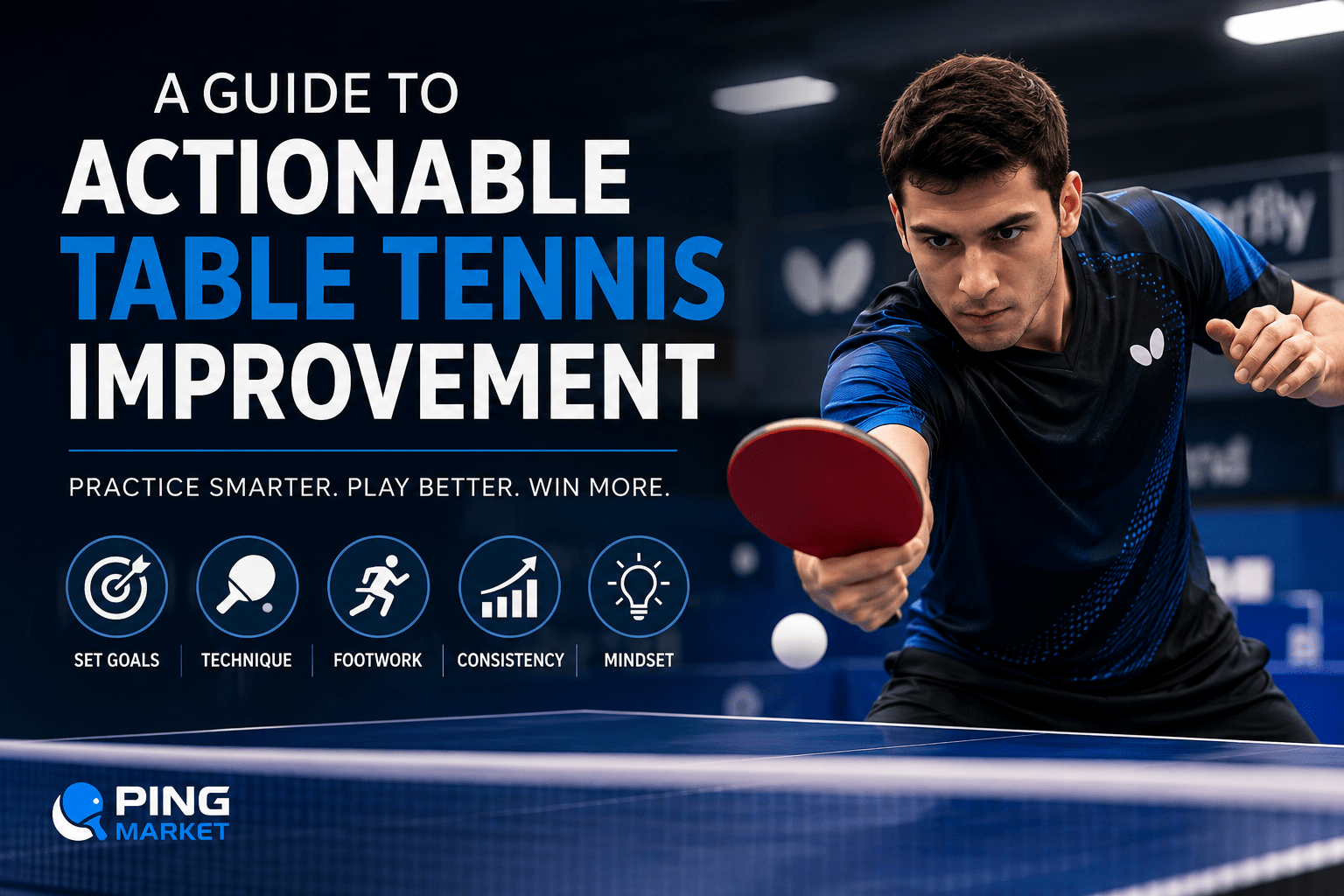
A Guide to Actionable Table Tennis Improvement

Introduction: The Boardroom Meets the Baseline
In the high-stakes environment of the C-suite, every decision counts. We analyze data, optimize processes, and demand measurable returns on every investment of time and resources. Yet, when many executives step away from the spreadsheet and onto the table tennis court, they abandon this disciplined mindset entirely. They revert to mindless rallies, hoping that sheer repetition will somehow translate into improvement. It rarely does.
Here is the hard truth that separates the casual player from the competitor: table tennis is not a game of luck or instinct. It is a game of strategy, precision, and deliberate execution—qualities that should feel remarkably familiar to any seasoned leader. The same principles that drive a successful quarterly turnaround—clear objectives, structured execution, and continuous recalibration—are precisely what will transform your game. If you want to dominate the table, you must first dominate your practice. This is not about playing more; it is about playing with intention.
My analysis, based on performance insights from top players, highlights the “Three-Point Attack” as a cornerstone of an offensive game. This concept is about more than just hitting a winner; it is about controlling the table by attacking all three zones—the wide forehand, wide backhand, and the opponent’s middle. To execute this effectively, you must understand the why behind every shot.
The “PPB” Framework: Placement, Positioning, and Balance
The foundation of a relentless attack is what I call the “PPB” principle. First, consider your Placement. Do not just hit the ball; place it with the intention of setting up your next shot and exploiting your opponent’s weaknesses. If you are a forehand-dominant player, attacking down the line to a right-handed opponent’s forehand might leave you exposed. Instead, targeting the middle or wide backhand forces a weaker return, putting you in control.
Second, Positioning is critical for maintaining pressure. The follow-through is not the end of the shot; it is a transition to the next. You must recover quickly, making your movement back to the ready position part of the same fluid motion. Finally, Balance is the glue that holds it all together. A powerful attack is useless if it leaves you off-balance and unable to recover for the next ball. Watch your footwork during the end of your stroke. Is your weight between your feet, ready to spring? Often, the perception of being “slow” is actually a failure of balance.
The Blueprint for Solo Practice: A 30-Minute Routine
For the executive with limited time, the most efficient path to skill development is a focused solo session. You can make meaningful progress without a partner, turning your practice into a high-return investment. Here is a proven 30-minute routine to integrate into your week.
0-5 Minutes: Hand-Eye Coordination. Start with the “Ghost” drill. Bounce the ball repeatedly on the forehand side of your paddle, then switch to the backhand, and finally alternate. This builds the “soft hands” and delicate touch essential for pushes and drops.
5-15 Minutes: Serve Precision. Use targets (like small pieces of tape) on the opponent’s side of the table. Serve 10 balls to each target—deep corners, short to the middle—and track your accuracy. The serve is the only shot you fully control, so master it.
15-20 Minutes: Consistency Against the Wall. Stand about 6-8 feet from a wall and hit forehand drives, aiming for a specific spot. Keep a steady rhythm and count consecutive hits. Switch to your backhand. This drill is pure consistency training.
20-25 Minutes: Shadow Footwork. Without a ball, simulate moving into position for a rally. Shuffle to your forehand, shadow a stroke, recover to center. Then move to your backhand. This builds the muscle memory for quick, efficient movement, which is the true foundation of your game.
25-30 Minutes: Cool Down. Finish with easy serves and gentle bounces to reinforce the touch you built at the start.
Conclusion: Lead at the Table
Improvement is not an accident; it is a strategy. By applying the same discipline you bring to the boardroom to your training regimen, you will see tangible results in weeks, not years. The table tennis court becomes an extension of your leadership mindset—a place where focus, adaptability, and execution are not just encouraged but demanded. Now, step up to the table and lead with purpose.